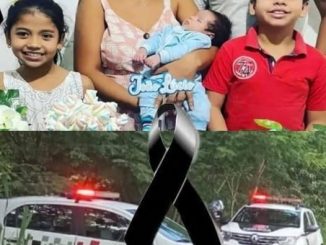
The first image is devastating. The face of a girl, barely twelve years old, with a gentle gaze and lips pressed together as if she were about to say something she’ll never get to say. The black ribbon in the corner confirms everything without a word. There’s no going back. No second chance. Only the silence left by a life cut short far too soon.
Nothing in that house seemed to foreshadow the tragedy. It was a day like any other. Familiar walls, everyday objects, the place that should have been the safest in the world. There, where a little girl laughed, dreamed, and grew, the unthinkable happened. A single step was enough to change everything. A fleeting moment that separated normality from absolute horror.

The news hit like a ton of bricks. Twelve years old. She was just beginning to understand life, just learning to defend her dreams. There were no goodbyes prepared, no time for final hugs or to say “I love you” one last time. The house was filled with echoes: her voice calling, her footsteps running down the hall, her laughter that now only exists in memory.
The second image is heartbreaking in a different way. A police officer, a man accustomed to harsh scenes, wipes away tears, unable to hide them. His uniform offers no protection from the pain. His face reflects more than sadness: it reflects helplessness. Because when a little girl dies like this, no amount of training is enough, no protocol can soothe the soul.
Around them, other men watch in silence. No one knows what to say. There are no words to explain why a family must face such an unjust loss. Death didn’t just take a little girl; it took away future birthdays, teenage laughter, dreams we’ll never know.
The mother, the father, the entire family were trapped in a before and after. Before, the house was alive. After, every corner hurts. Every object holds a memory. Every silence weighs heavily. The place where it all happened becomes an open wound that won’t heal, even as time passes.
People talk, the news circulates, the headline is shared. But behind those words cut off by a “Read more,” there are sleepless nights, unanswered questions, and unpublished pain. Because the true impact isn’t in the image, but in what isn’t seen: an empty bed, a backpack no longer used, a broken family.
The policeman’s tears aren’t just for her. They’re for all the little lives lost without explanation. They’re for the injustice of a tragedy that should never be repeated. They’re for the feeling of always arriving too late, when there’s nothing left to save.
This story doesn’t need gruesome details to be chilling. Just looking at that face, just imagining that house, just understanding that a 12-year-old girl shouldn’t be remembered like this. She should be growing up, making mistakes, learning, living.
Today, all that remains is to honor her memory. To say her name in silence. To remember her with respect. And to not forget that behind every headline lies a real, deep, and irreversible pain.